

How Influencer Partnerships Build Trust in 2026
Influencer partnerships build trust when they are rooted in transparency, authenticity and stakeholder alignment. Learn how brands can strengthen credibility and community confidence through creator relationships in 2026.

As influencer marketing matures, audiences are asking a different question: not whether content is sponsored, but whether it can be trusted. For organizations operating in healthcare, senior living, tourism, education and nonprofit sectors, creator partnerships are increasingly influencing stakeholder perceptions, community credibility and long-term reputation. Here’s what brands need to know about building trust through influencer partnerships in 2026.
Key Takeaways
- Trust matters more than reach in influencer marketing.
- Authentic alignment outperforms celebrity endorsements.
- Transparency increases audience confidence.
- Community credibility is often more valuable than follower count.
- Influencer partnerships should be evaluated as reputation-building investments, not promotional transactions.
Influencer marketing has matured. What began as a visibility tactic has become something much more consequential: a trust-building function.
In today’s digital-first landscape, influencer relations must be evaluated through the same lens as public relations, community engagement and stakeholder communications. Every creator partnership influences how a brand is perceived, not only by customers, but also by employees, donors, residents, policymakers, investors and future advocates.
That matters because these partnerships continue to expand. Business Insider reports that U.S. creator advertising spend is projected to reach $37 billion, growing four times faster than the broader media industry. At the same time, influencer marketing has become a mainstream communications strategy, with Influencer Marketing Hub reporting widespread adoption among brands and marketers.
As influencer relationships become more common, audiences are asking a different question. Not, “Is this sponsored?” but rather, “Can I trust it?”
For brands operating in trust-dependent sectors like healthcare, senior living, tourism, education and nonprofit organizations, the answer matters. The strongest influencer programs succeed because they create alignment rather than simply amplification.
Do Influencer Partnerships Build Trust?
In short, yes. Research suggests consumers do not automatically distrust paid partnerships. Edelman’s 2025 Trust Barometer found that people increasingly evaluate brands through the lens of authenticity, transparency and whether organizational actions align with stated values. When creator partnerships reflect those expectations, sponsorship alone is unlikely to undermine credibility.
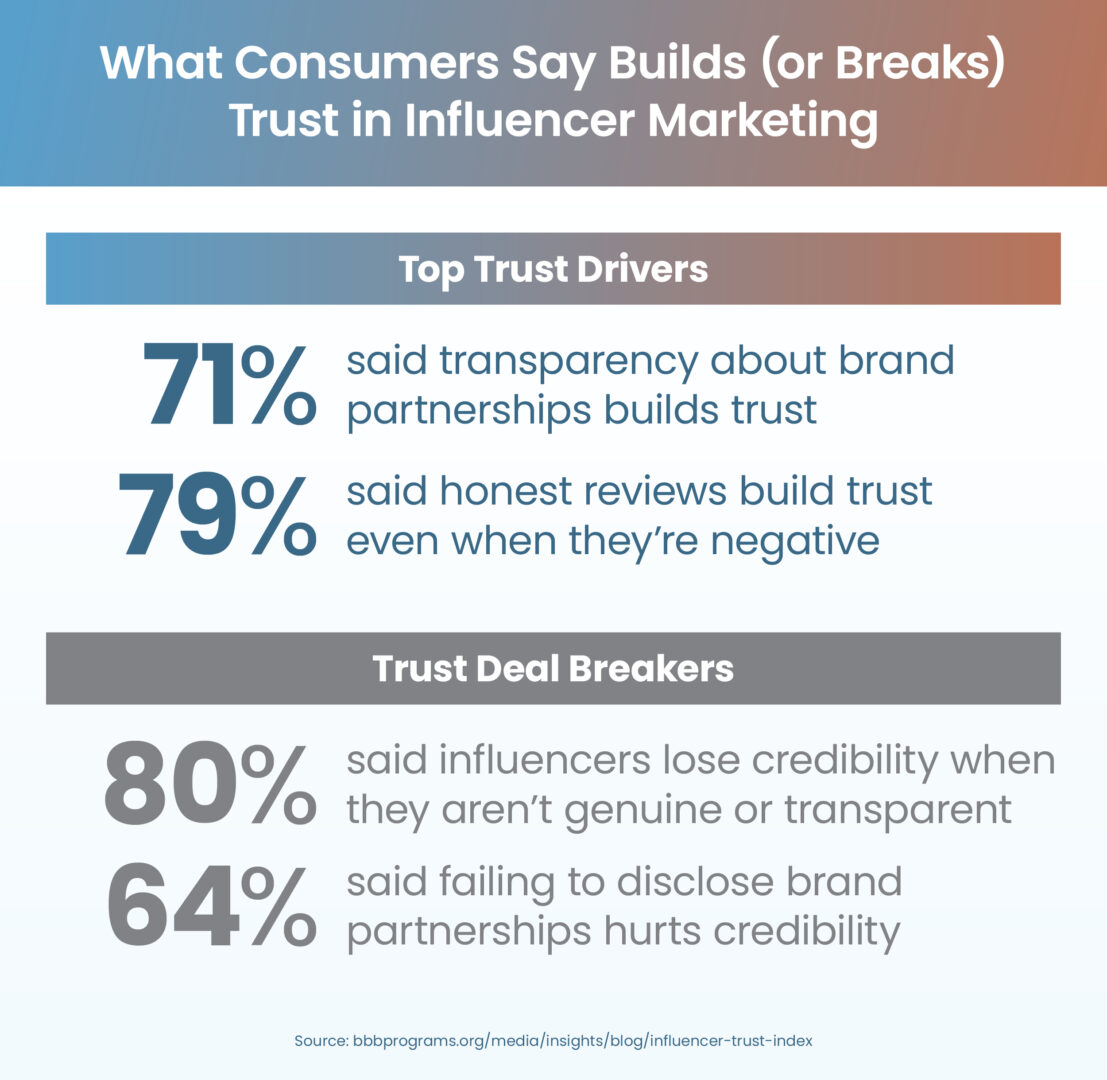
In addition, the 2025 Influencer Trust Index found that most consumers believe sponsorship itself does not diminish credibility when the relationship is disclosed clearly and the creator genuinely aligns with the product or organization.
In other words, paid partnerships can support trust while poorly aligned partnerships can undermine it. When executed thoughtfully, influencer partnerships build trust by reinforcing authenticity and alignment between brands and the communities they serve.
Source: BBB National Programs
Trust Starts Before the Partnership
Many organizations evaluate creators based on audience size, engagement rates or demographics. Those factors matter, but they’re not the strongest predictors of trust.
The most effective influencer relationships begin with alignment. Does the creator’s voice, lived experience and community standing naturally support the story the organization is trying to tell? Would the partnership feel credible even if there were no sponsorship involved?
When audiences sense a natural fit, trust has a foundation. The minute they sense a transaction rather than a genuine relationship, you risk skepticism and disengagement.
Transparency Is No Longer Optional
Disclosure requirements may originate from regulators, but audience expectations are driving a higher standard.
The 2025 Influencer Trust Index also found that nearly 3 in 4 consumers believe both brands and creators share responsibility for ensuring sponsored content is truthful and transparent. Transparency is a way to demonstrate respect for your audience.
Increasingly, consumers are willing to accept paid partnerships. What they reject is the feeling that a relationship has been concealed or presented as something it’s not.
We see this firsthand in our work with tourism and hospitality clients. For one Southern California destination experience provider, many of the most successful creator collaborations are built around experiences that the influencer and their family or friends would genuinely enjoy and naturally want to share with their audiences. The partnership is transparent, but the enthusiasm is authentic. That’s an important distinction because audiences can often tell the difference between a recommendation that stems from genuine experience and one that exists only because compensation changed hands.
Community Legitimacy Matters More Than Reach
One of the most common mistakes brands make is assuming reach automatically creates influence. It doesn’t.
Especially in industries where relationships, reputation and stakeholder confidence drive outcomes, credibility is often determined by community legitimacy rather than audience size. A creator with a smaller but highly engaged and trusting audience may generate far more meaningful impact than a celebrity endorsement with broad reach but little relevance.
The wrong partnership can create visibility while simultaneously eroding confidence. The right partnership strengthens trust because it reinforces existing community relationships rather than attempting to manufacture them. This is one of the clearest examples of how influencer partnerships build trust: they strengthen credibility within communities that already share values or interests with the organization.
Four Principles for Trust-Centered Influencer Marketing
Organizations building influencer programs in 2026 should prioritize four principles. These principles matter because trust is cumulative. Every creator partnership either strengthens or weakens stakeholder confidence over time.

1. Alignment Before Audience Size
Choose creators whose values, experiences and communities naturally connect to your organization. Trust begins with fit, not follower counts.

2. Transparency in Every Partnership
Clear disclosure strengthens credibility and demonstrates respect for audiences. Transparency is no longer simply a compliance issue. It is a trust issue.

3. Community Credibility Over Celebrity Reach
Influence is not measured solely by audience size. Trust within a relevant community often drives more meaningful outcomes than broad awareness alone.

4. Long-Term Relationships Over One-Off Promotions
Ongoing partnerships create familiarity, consistency and stronger trust signals than transactional campaigns. Long-term relationships are often what transform awareness into loyalty and repetition reinforces credibility.
The Future of Influencer Relations Is Trust
As the creator economy grows, you face a choice: treat your influencer partnerships as promotional channels or as trust-building channels.
We believe the second approach is more sustainable because the goal of influencer relations should not be borrowed credibility. It should be earned legitimacy within the communities that matter most. Ultimately, influencer partnerships build trust when they create consistency between what an organization says, who it partners with and how it shows up in the world.
In human-centered sectors, trust is created when audiences see consistency between what an organization says, who it partners with and how it behaves.
Visibility can be purchased. Credibility must be earned.
If your organization is looking to build trust through influencer partnerships, strengthen community credibility or ensure your communications align with audience expectations, it may be time to rethink how creator relationships fit into your broader communications strategy. When you’re ready, we’re available at (858) 886-7900 or info@wocresonance.com.
Author: David Cumpston is Director, WOC | Resonance.
Frequently Asked Questions
What is influencer trust?
Influencer trust is the confidence audiences place in a creator’s recommendations, expertise and authenticity. Trust is built when partnerships align naturally with a creator’s experience, values and audience expectations.
What makes influencer partnerships trustworthy?
Research suggests consumers do not automatically distrust paid partnerships. Edelman’s 2025 Trust Barometer found that people increasingly evaluate brands through the lens of authenticity, transparency and whether organizational actions align with stated values. When creator partnerships reflect those expectations, sponsorship alone is unlikely to undermine credibility.
Why is transparency important in influencer marketing?
Transparency demonstrates respect for the audience. Consumers are more likely to trust sponsored content when brands and creators clearly disclose their relationships and communicate honestly about the nature of the partnership.
What makes an influencer partnership credible?
Credible influencer partnerships are built on alignment. The creator’s values, lived experience, audience and reputation should naturally connect to the brand’s mission, product or service. Partnerships that feel forced or transactional often create skepticism rather than trust.
Is reach the most important factor when selecting influencers?
Not necessarily. While audience size can increase visibility, credibility is often driven by relevance, trust and community legitimacy. Smaller creators with highly engaged audiences may generate stronger outcomes than larger influencers with less authentic connections.
How can brands build trust through influencer relationships?
Brands can build trust by prioritizing alignment, transparency and long-term credibility over short-term exposure. The most effective partnerships reinforce existing community relationships and create consistency between what a brand says, who it partners with and how it behaves.